Pets in the USA (2026):
Pets in the United States are not just “animals at home”—they’re commonly treated as family members, with significant spending on food, healthcare, training, grooming, travel, and services. If you’re creating a U.S.-focused pet guide, the most useful approach is to cover (1) what pets are most common, (2) how Americans feed and care for them, (3) training and behavior standards, (4) veterinary and insurance realities, (5) legal/regulatory considerations (national + state/local variation), and (6) where people buy/adopt pets and services.
1) What Pets Americans Most Commonly Keep (and Why) Dogs and cats dominate—by a wide margin
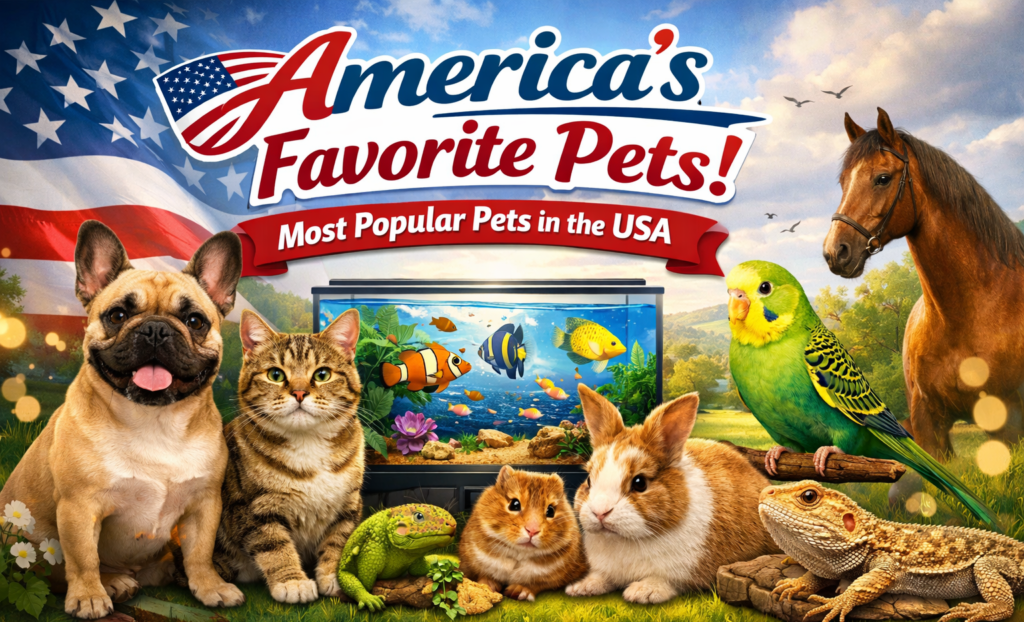
Across U.S. households, dogs and cats remain the leading choices. Recent industry and market summaries consistently report tens of millions of U.S. households with dogs and cats, with overall pet ownership expanding in recent years.
Why Americans love dogs:
Companionship and emotional bonding
Lifestyle fit (walks, outdoors, social activities)
Home security and routine
Why Americans love cats:
Generally easier day-to-day maintenance than dogs
Apartment-friendly
Independent but affectionate
Other popular pet categories in the U.S.
While dogs/cats lead, many households also keep:
Fish (freshwater/saltwater)
Birds
Small animals (hamsters, guinea pigs, rabbits)
Reptiles (often niche; needs specialized care)
These categories fluctuate more year to year than dogs/cats.
2) Choosing the Right Pet for a U.S. Household
A “best pet” in the U.S. is usually a best-fit decision, driven by:
Housing: apartment vs. house; yard; pet policy
Time: daily walks/training vs. lower-maintenance pets
Budget: food, grooming, vet care, emergency fund
Family mix: kids, seniors, allergies, other pets
Travel frequency: boarding, pet sitters, airline rules
- U.S. reality check: Many renters face “pet rent,” deposits, or breed/size limits. This makes cats, small dogs, or caged pets more common in certain cities.
3) Food & Nutrition: What Americans Typically Feed Their Pets
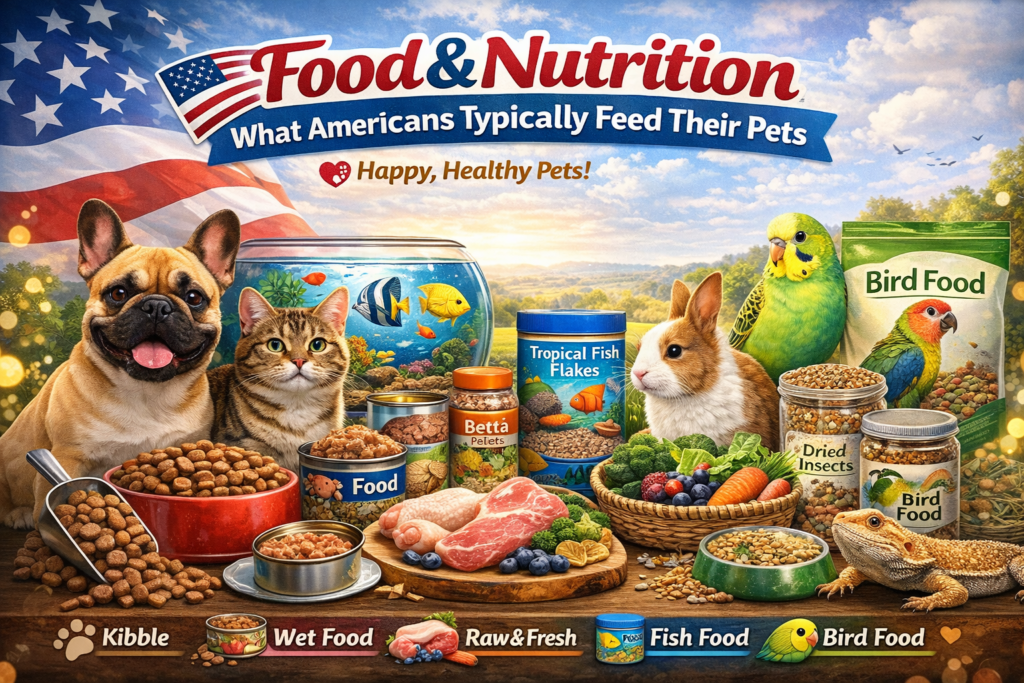
Dogs and cats: the core of U.S. pet nutrition:
In the U.S., most owners use:
Commercial kibble (dry food): convenience, shelf-stable
Wet/canned food: palatability, hydration benefits (especially cats)
Fresh/frozen “human-grade style” meals: growing premium trend
Treats and chews: common but frequently overused (weight gain risk)
Key U.S. best practice: choose diets that are “complete and balanced” for the pet’s life stage (puppy/kitten, adult, senior). Owners often rely on veterinarian guidance for allergies, weight loss, kidney disease (cats), and sensitive stomachs.
Pets with specialized diets
Rabbits/guinea pigs: hay-based diets; vitamin C needs (guinea pigs)
Birds: species-specific pellets + fresh produce; seed-only diets are often discouraged by vets
Reptiles: live/frozen feeders or precise plant/insect diets; UVB lighting affects nutrient metabolism
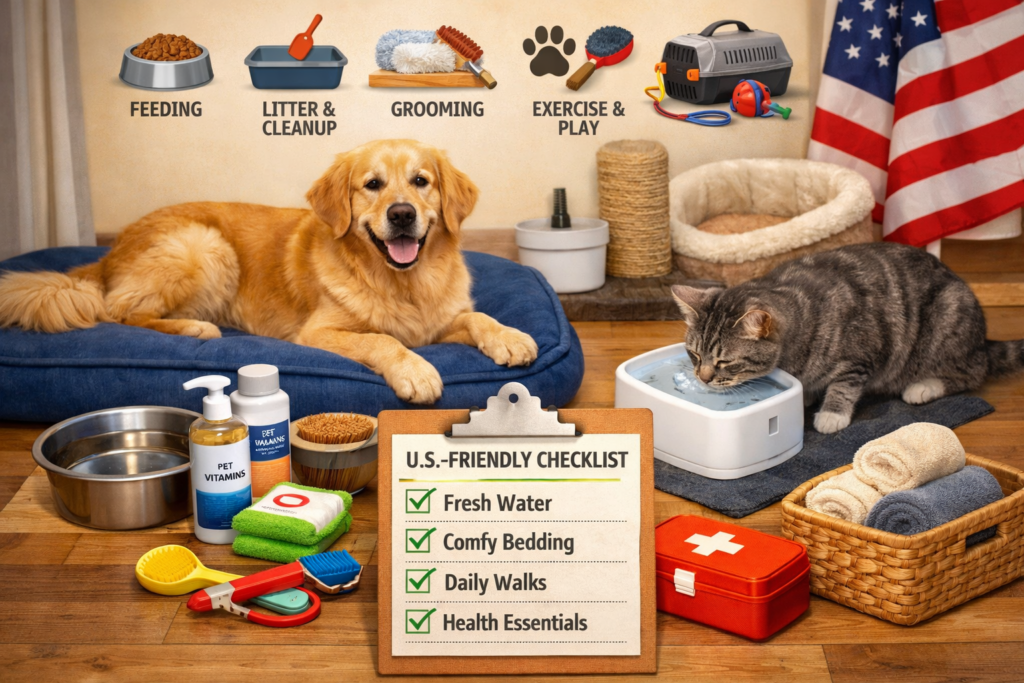
4) Daily Care & Home Setup (U.S.-Friendly Checklist)
Dogs
Safe containment (crate or gated space)
Leash, harness, ID tags, waste bags
Routine: potty schedule + exercise + enrichment
Grooming: brush, nail trims, dental care
Cats
Litter boxes (rule of thumb: 1 per cat + 1 extra)
Scratching posts, vertical climbing spaces
Play sessions to prevent boredom/behavior issues
Hairball and dental care as needed
Small animals/birds/reptiles
Correct enclosure size and ventilation
Temperature/humidity control when required
Enrichment and species-appropriate handling
Regular cleaning to prevent disease and odor
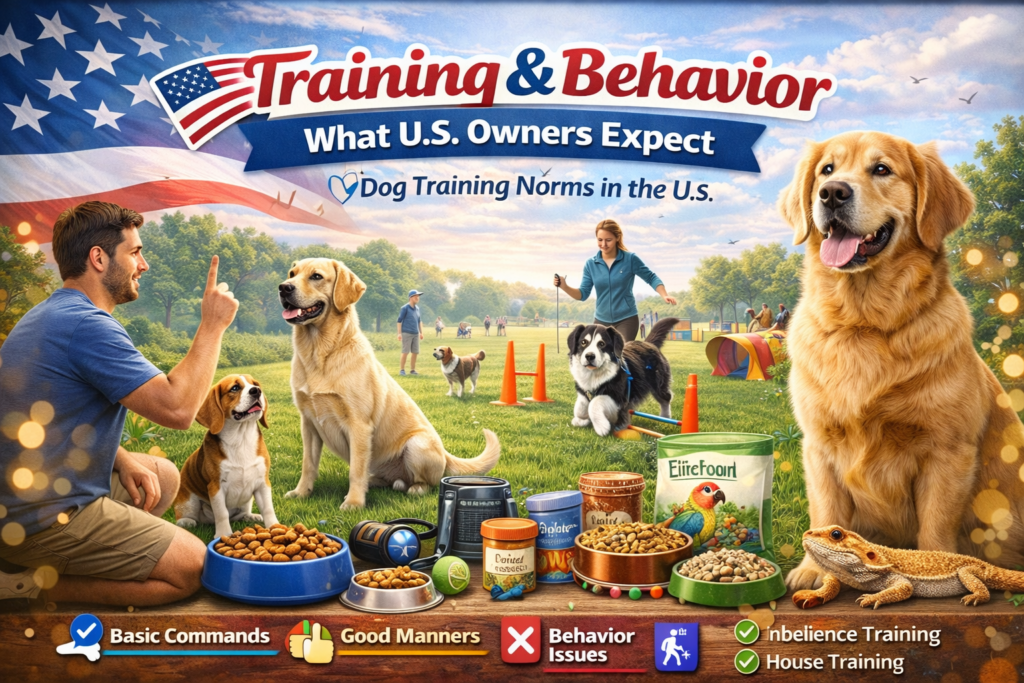
5) Training & Behavior: What U.S. Owners Expect. Dog training norms in the U.S.
Most U.S. owners aim for:
House-training
Leash manners
Reliable recall (“come”)
Basic obedience (“sit,” “stay,” “leave it”)
Socialization (especially for puppies)
Common training routes:
Group obedience classes (local trainers or big-box pet stores)
Private trainers for reactivity/aggression
Board-and-train (higher cost; quality varies)
Positive reinforcement methods (dominant mainstream approach)
Cat behavior “training”
Cats are trained differently, but U.S. owners routinely work on:
Litter box habits
Scratch redirection (posts, cardboard scratchers)
Clicker training for enrichment (growing trend)
6) Veterinary Care in the U.S.: Routine, Emergencies, and Costs
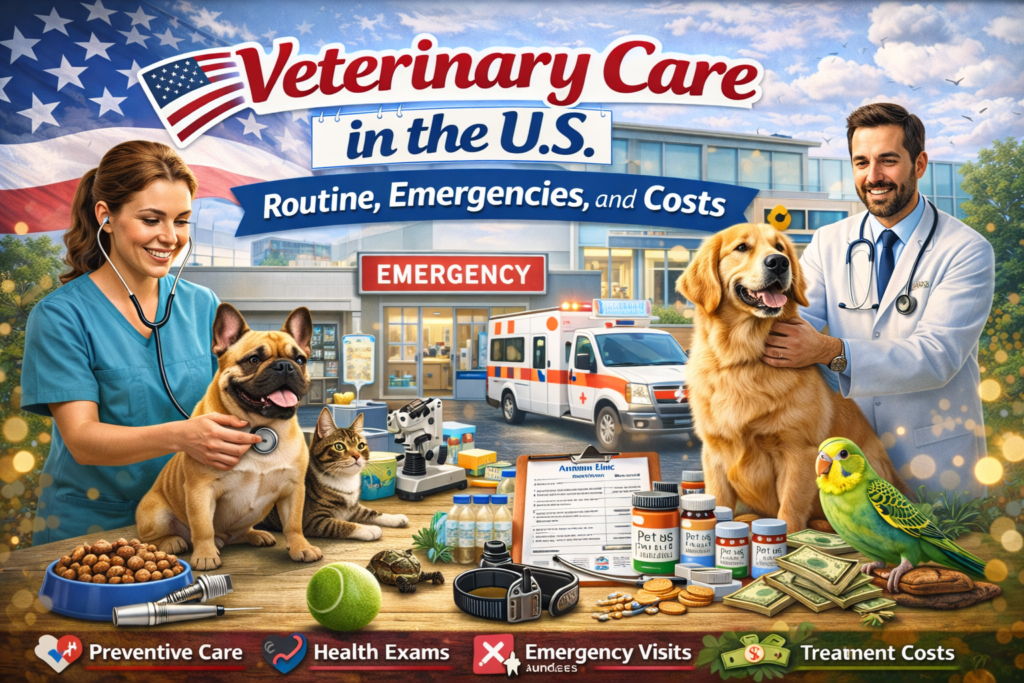
What “standard care” typically includes
Annual or semi-annual wellness exams
Core vaccines (varies by species, age, and state/local norms)
Parasite prevention (fleas, ticks, heartworm for dogs; region-dependent)
Spay/neuter (often recommended; sometimes required by shelters/rescues)
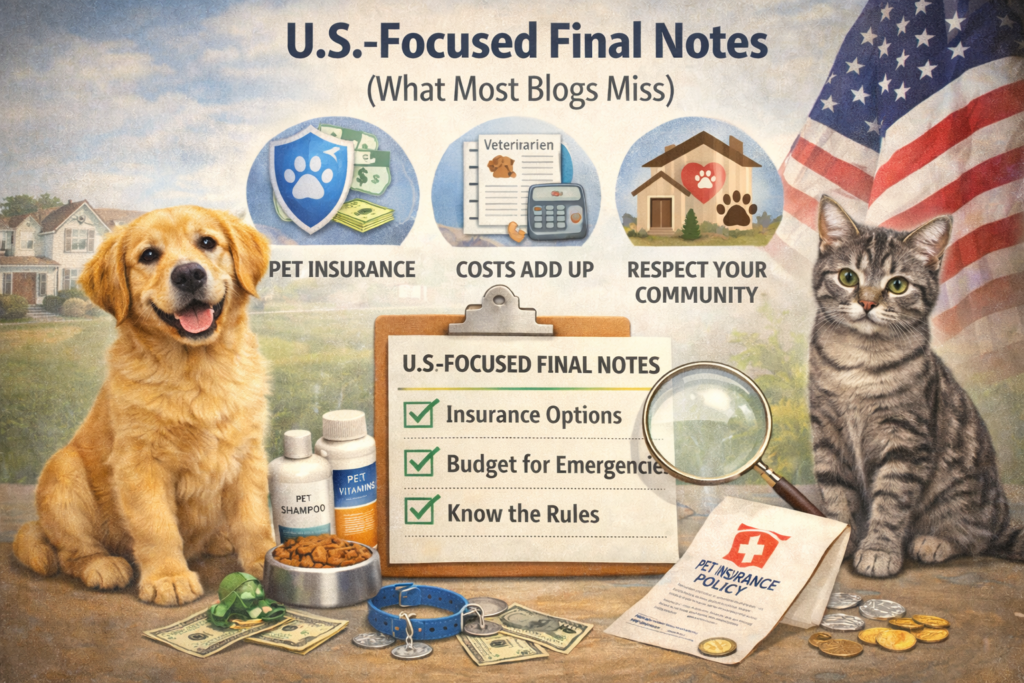
Pet insurance is increasingly common
U.S. veterinary care can be expensive—especially emergencies. Many owners manage risk with:
Pet insurance
Employer “pet benefits” (emerging)
Emergency savings fund
7) Legal and Regulatory Reality in the U.S. (What to Know)
Important: Pet law is highly local in the U.S. Federal rules exist in specific areas (like certain travel/import and commercial animal businesses), but day-to-day pet rules are usually state/county/city.
A) Licensing, registration, and ID
Many U.S. cities/counties require:
Dog licensing (often linked to rabies vaccination)
Leash laws
Poop-scooping ordinances
Limits on number of animals per household
B) Housing rules (rentals, condos, HOAs)
Common U.S. constraints:
Breed restrictions (varies widely; controversial; sometimes insurance-driven)
Weight limits (e.g., 25–50 lbs thresholds)
Pet rent and deposits
HOA rules for condos/townhomes
C) Service animals vs. emotional support animals (ESAs)
Under U.S. federal ADA rules for public access:
A service animal is generally a dog individually trained to perform tasks for a person with a disability.
Miniature horses may be allowed as a special case under ADA provisions in some contexts, evaluated under specific factors.
Practical takeaway: Service animal access is not the same as “pet-friendly.” Businesses can ask limited questions allowed by ADA guidance, and service animals must be under control.
D) Travel and import rules (entering the U.S. with pets)
If your audience includes immigrants, travelers, or expats: rules can be strict and have changed recently.
The CDC maintains U.S. requirements for bringing dogs into the United States, including rules tied to rabies risk and recent travel history.
USDA APHIS provides broader pet travel guidance, including what qualifies as a “pet” and when other import rules apply.
E) Pet shops, breeders, and the Animal Welfare Act (AWA)
Commercial sellers and certain animal businesses can fall under federal oversight, including licensing/inspection frameworks under USDA/APHIS and the Animal Welfare Act.
Consumer best practice in the U.S.:
Prefer reputable rescues/shelters or ethical breeders
Ask for health records, vaccinations, and clear sales contracts
Avoid suspicious “too-good-to-be-true” online listings
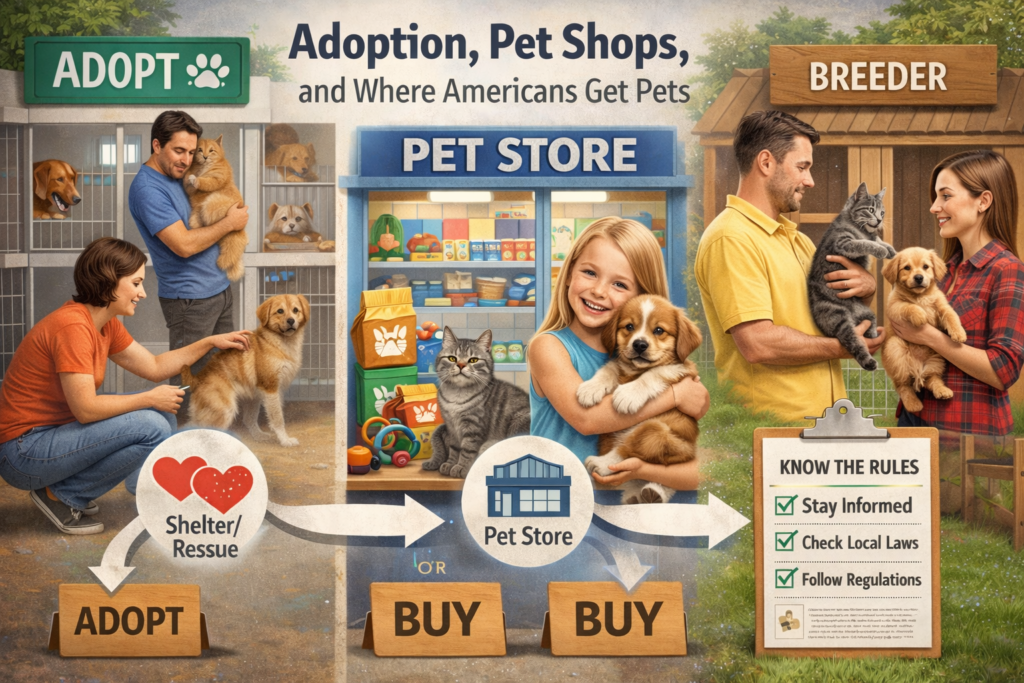
8) Adoption, Pet Shops, and Where Americans Get Pets.
Shelters and rescues:
A major pathway in the U.S., often offering:
Spay/neuter included
Initial vaccinations
Basic medical checks
Adoption counseling and returns policy (varies)
Shelters and rescues
A major pathway in the U.S., often offering:
Spay/neuter included
Initial vaccinations
Basic medical checks
Adoption counseling and returns policy (varies)
Ethical breeders
Chosen when families want:
Predictable temperament/size (within limits)
Working or sport dogs
Known lineage and health testing
Pet stores
U.S. pet stores are widely used for:
Food, supplies, grooming, training classes
Adoption events (often in partnership with rescues)
In some areas, retail sale of dogs/cats is restricted or shifting toward adoption-only models (local legal trend, varies by jurisdiction).
9) A Practical “New Pet” U.S. Starter Plan (First 30 Days)
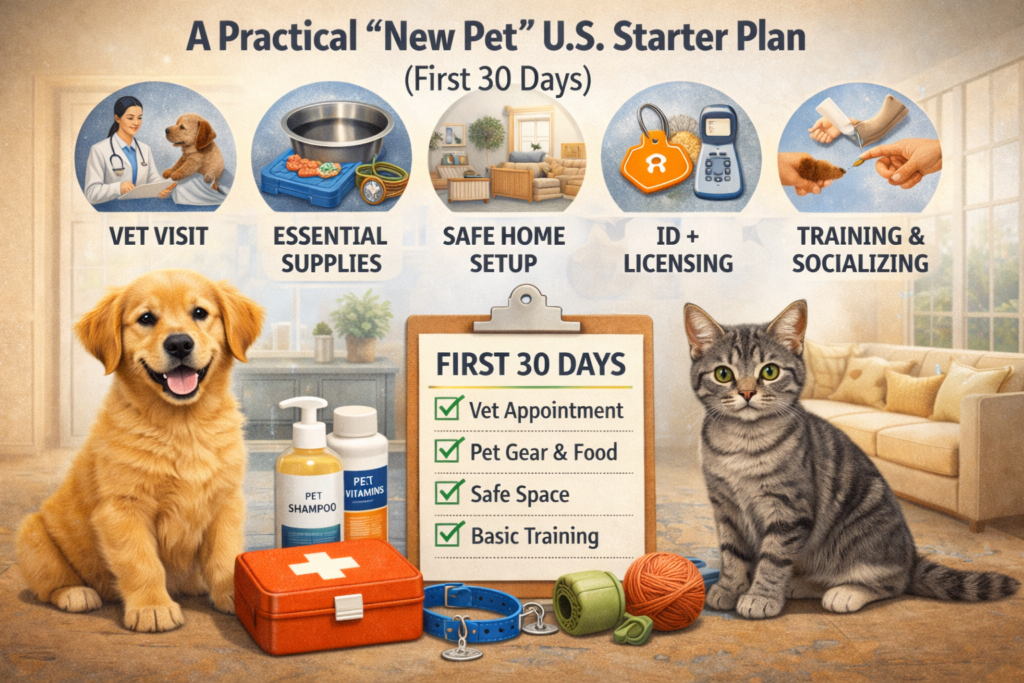
Day 1–3: Setup & safety
ID tag + microchip registration
Vet appointment scheduled
Safe spaces (crate/bed; quiet room for cats)
Week 1: Routine
Feeding schedule
Bathroom/litter habits
Household rules (furniture, sleeping areas)
Week 2–4: Training & socialization
Basic commands (dogs) / play + litter consistency (cats)
Positive reinforcement
Controlled exposure to people, environments, and sounds
By Day 30: Preventive care plan
Vaccines per vet guidance
Parasite prevention
Grooming and dental routine baseline
Emergency plan (nearest ER vet + budget/insurance)
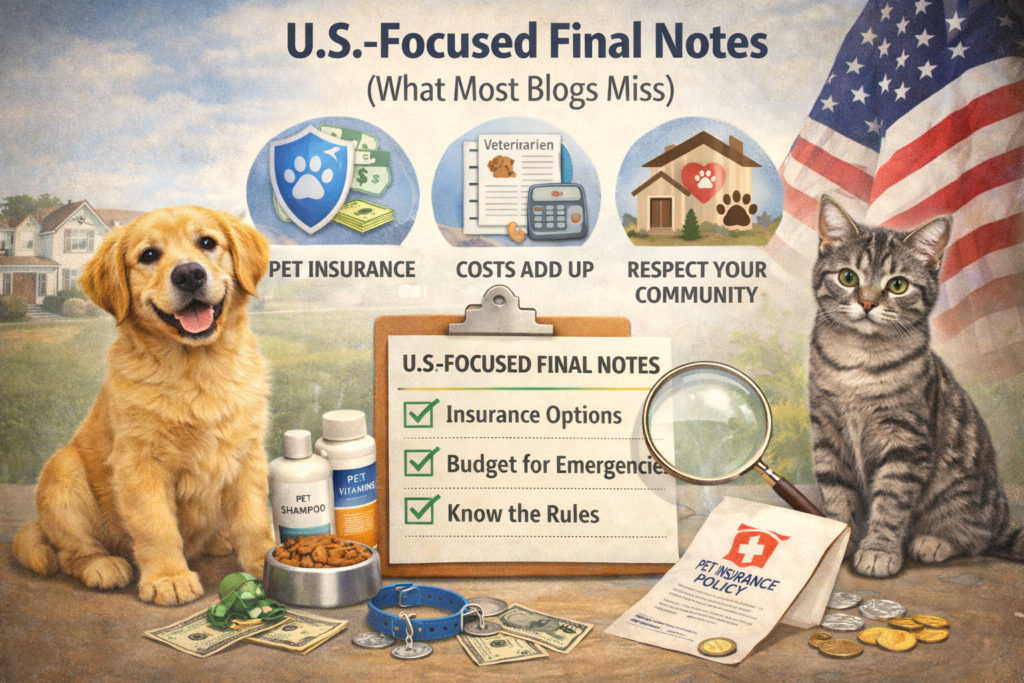
10) U.S.-Focused Final Notes (What Most Blogs Miss)
“Family member” mindset is real: Americans often prioritize pet comfort, enrichment, and health spending.
Legal rules are local: encourage readers to check their city/county animal control page for licensing, leash laws, breed rules, and pet limits.
Travel rules matter: especially for international audiences—CDC and USDA APHIS are the authoritative sources.
Service animal compliance is specific: ADA definitions and limitations are important to prevent misinformation.